
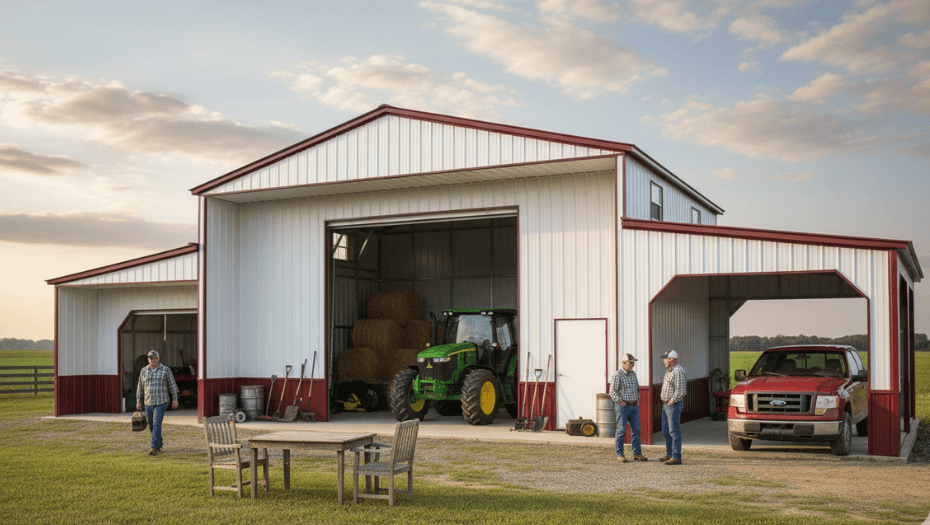
Many people associate farming with tradition. But it has always been more useful for feeding the masses with a variety of produce. To store the produce and keep it in good condition throughout the year, a strong, functional space is always needed. Many farmers in the USA use steel barns for proper storage and housing livestock. Because it’s a safe space to deal with harsh weather and keep everything inside in better condition.
But these structures are not just trends. They are a quiet revolution. From small family farms to large agricultural operations, these barns are changing how farmers protect livestock, store crops, and manage daily work. If you are curious to learn about this shift and why it matters so much today, scroll down.
What Are Metal Barns?
Metal barns are farm buildings made with metal components rather than traditional wood. They are designed to handle tough farm conditions while staying strong for decades. These barns can be used for many purposes, such as housing animals, storing hay, parking machinery, or even setting up workshops.
What makes them special is their flexibility. They can be customized in size, shape, and layout depending on what a farmer needs. Because of this, vertical metal barn easily fit into both small farms and large-scale agricultural setups. This adaptability sets the stage for why farmers are moving toward them so quickly.
Why Are Modern Farmers Switching to Steel Barns?
Across the USA, modern farmers are making a clear shift toward steel barns. However, this change is not random; it is driven by real challenges farmers face every day. Some challenges are rising maintenance costs, extreme weather, and the need for efficient storage solutions, which are pushing farmers to seek better options.
Steel-based barns offer efficiency by reducing repair work, durability by standing strong against harsh conditions, and long-term value by lasting much longer than traditional barns. Because of these benefits, farmers are no longer asking if they should switch, but when. To better understand this, let’s look closely at how these barns are truly revolutionizing modern farming.
Reasons How Steel Barns Are Revolutionizing Modern Farming
The revolution and shift are evident due to the features of steel. They make the structure beneficial in various ways. Let’s understand one by one.
1. Built for Strength and Long-Term Durability
Withstanding Extreme Weather Conditions
Farming in the USA means dealing with storms, heavy snowfall, strong winds, and even wildfires in some regions. Traditional wooden barns often struggle under such pressure. Metal barns, on the other hand, are designed to handle these conditions with ease. Their solid design and engineered framework help them stay stable during extreme weather. In our opinion, this peace of mind alone makes steel barns worth the investment for farmers who can’t afford losses.
Resistance to Pests and Decay
Wooden barns attract termites, rodents, and moisture-related damage. Over time, this leads to rot and weak structures. Vertical metal barns do not face these problems. They resist pests naturally and don’t absorb moisture like wood. This means fewer surprises and fewer repair bills. Farmers can focus on their work rather than on constant maintenance.
2. Cost-Effective Choice for Farmers
Lower Maintenance Costs Over Time
At first glance, some farmers think vertical metal barns might cost more. But over time, the story changes completely. It is because wooden barns require repainting, replacing panels, and frequent repairs. Prefab barn buildings are strong and require minimal upkeep. In our view, spending less time and money on maintenance gives farmers more freedom to invest in crops and animals and to use new features.
Better Return on Investment
Steel barns last for decades; this feature is not seen in traditional barns. This long lifespan means farmers get real value from their investment. Many farmers even see higher property value because buyers prefer modern, durable farm structures. A farm steel building becomes an asset, not an expense, and that mindset shift is powerful.
3. Flexible Design That Grows With Farming Needs
Custom Sizes and Layouts
No two farms are the same, and metal barns understand that. Farmers can customize width, height, and layout based on their needs. Whether it’s space for livestock, grain storage, or equipment, the barn can be designed accordingly. As farms grow or change direction, these barns can also be expanded without major reconstruction.
Multi-Purpose Usage
Pre-engineered barns are not limited to one task. A single structure can store equipment, house animals, and act as a workspace. This multi-use nature helps farmers use land more efficiently.
In modern farming, flexibility is everything, and metal barns deliver it well.
4. Faster Construction and Easy Installation
Reduced Downtime for Farmers
Time is critical in farming. Long construction projects can interrupt daily operations. Metal barns are pre-engineered, which means they are quicker to assemble compared to traditional barns. Faster construction allows farmers to begin using the space sooner, directly supporting productivity.
Less Labor Required
Since many parts are pre-made, fewer workers are needed during construction. This helps reduce labor costs and project delays, especially in areas where skilled labor is hard to find. A well-designed steel structure saves both time and effort.
5. Better Storage and Protection for Equipment and Crops
Safe Storage for Expensive Machinery
Modern farming equipment is costly. Tractors, harvesters, and tools need proper protection. Metal barns offer enclosed, secure spaces that shield machinery from weather damage. This protection extends equipment life and reduces repair costs.
Improved Crop Storage Conditions
Crops such as hay and grain require dry, well-ventilated storage. Prefabricated barns can be designed with proper airflow systems to reduce moisture buildup and spoilage. Better storage means less waste and better profits for farmers.
6. Environment-Friendly and Sustainable Option
Recyclable Materials
Metal barns are made from recyclable materials. When a structure reaches the end of its life, the metal can be reused instead of going to waste. For farmers who care about sustainability, this is a big plus.
Energy Efficiency Options
Prefab barns can be paired with insulation, solar panels, and natural lighting systems. These features help reduce energy use and lower utility bills. A smart metal building supports both farming and environmental responsibility.
7. Supporting the Future of Smart Farming
Compatibility With Modern Technology
Today’s farms use technology like automated feeding systems, climate control, and monitoring devices. Vertical metal barns can easily support these systems because of their strong and adaptable design. This makes them future-ready and perfect for modern agricultural needs.
Helping Farms Stay Competitive
According to us, farms that adopt modern infrastructure stay ahead in the long run. Metal barns help farmers work smarter, not harder, which is exactly what today’s competitive farming world demands.
Final Thought
So, these steel structures are clearly reshaping modern farming across the USA. They offer strength, flexibility, cost savings, and long-term value, all things today’s farmers truly need. As farming continues to evolve, choosing better structures is no longer optional. If you ask us, metal barns are not just buildings; they are tools that help farmers grow, adapt, and succeed in a changing world.


