
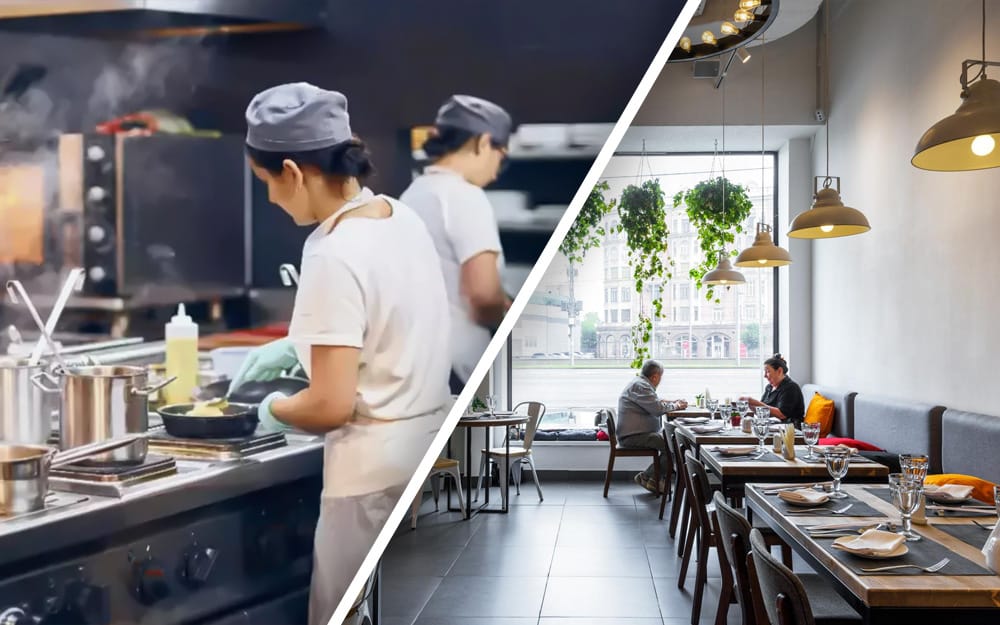
The food industry is evolving faster than ever. From street-side eateries to fine dining restaurants, the way people experience food has changed dramatically. But one of the biggest shifts in recent years has been the rise of cloud kitchens. If you’ve ever ordered food online, chances are it came from one. This brings us to a burning question: Cloud kitchens vs traditional restaurants — which one is actually winning?
Let’s break it down in a simple, practical and honest way.
What Are Cloud Kitchens?
Cloud kitchens, also known as ghost kitchens or virtual kitchens, are delivery-only food businesses. They don’t have dine-in spaces, waitstaff, or front-facing locations. Their entire operation is built around online orders through apps and websites.
In simple terms, they focus on cooking + delivery, nothing else.
What Are Traditional Restaurants?
Traditional restaurants are what we’ve always known — physical spaces where customers can walk in, sit, dine and enjoy an experience. These include cafes, casual dining and fine dining establishments.
They offer more than just food — they provide ambience, service and social experience.
The Cost Factor: A Clear Winner?
One of the biggest differences lies in startup and operational costs.
- Cloud Kitchens
- Lower rent (no prime location needed)
- Minimal staff
- No interior or decor investment
- Lower utility costs
- Traditional Restaurants
- High rent (prime locations)
- Larger staff (servers, managers, cleaners)
- Expensive interiors and furniture
- Ongoing maintenance costs
Verdict: Cloud kitchens clearly win when it comes to affordability. They allow entrepreneurs to start with less risk and scale faster.
Customer Experience: Where Traditional Restaurants Shine
Food is not just about taste — it’s also about experience.
- Traditional restaurants offer:
- Ambience and atmosphere
- Personal service
- Social interaction
- Presentation beyond packaging
- Cloud kitchens:
- Focus mainly on taste and packaging
- Limited emotional connection
- No dine-in experience
Verdict: Traditional restaurants dominate when it comes to creating memorable experiences.
Convenience: The Modern Consumer Chooses Speed
Today’s customers value speed and convenience more than ever.
- Cloud kitchens:
- Designed for fast delivery
- Multiple brands can operate from one kitchen
- Easy to order via apps
- Traditional restaurants:
- Slower service during peak hours
- Limited delivery focus (in many cases)
Verdict: Cloud kitchens win the convenience game hands down.
Scalability: Who Can Grow Faster?
Scaling a food business is easier said than done.
- Cloud kitchens:
- Can open multiple locations quickly
- Easy to test new menus or brands
- Lower financial risk when expanding
- Traditional restaurants:
- Expansion requires heavy investment
- Time-consuming setup
- Higher risk with each new outlet
Verdict: Cloud kitchens are far more scalable and flexible.
Brand Building: A Surprising Twist
Many people assume traditional restaurants have an advantage here — but that’s not always true.
- Traditional restaurants:
- Build strong local identity
- Word-of-mouth plays a big role
- Cloud kitchens:
- Rely heavily on digital branding
- Use data and reviews to grow
- Can run multiple brands from one kitchen
Verdict: Both models have strengths, but cloud kitchens are catching up fast through digital strategies.
Food Quality and Consistency
Consistency is key in the food business.
- Cloud kitchens:
- Standardized processes
- Focus on delivery-friendly food
- Easier quality control in smaller setups
- Traditional restaurants:
- Quality can vary depending on staff and rush
- Wider menu can sometimes impact consistency
Verdict: Cloud kitchens often deliver more consistent results, especially for delivery orders.
Technology: The Game Changer
Technology is where cloud kitchens truly shine.
- Automated order systems
- Data-driven decision making
- Real-time performance tracking
- Menu optimization based on demand
Traditional restaurants are adopting tech too, but cloud kitchens are built around it from day one.
Verdict: Cloud kitchens lead in tech integration.
Profit Margins: Who Earns More?
Profitability depends on multiple factors, but trends show:
- Cloud kitchens:
- Lower overhead = higher margins
- Delivery platform commissions can reduce profits
- Traditional restaurants:
- Higher costs = thinner margins
- Additional revenue from dine-in and beverages
Verdict: It’s a close fight, but cloud kitchens often achieve better margins due to lower costs.
Challenges Faced by Both Models
No business model is perfect.
Cloud Kitchens Challenges:
- High competition online
- Dependence on delivery platforms
- Branding limitations
- Customer loyalty is harder to build
Traditional Restaurant Challenges:
- High operational costs
- Location dependency
- Staff management issues
- Slower adaptability
So, What’s Actually Winning?
Here’s the truth — it’s not a one-sided victory.
- Cloud kitchens are winning in terms of growth, scalability and cost-efficiency.
- Traditional restaurants are still winning in experience, emotional connection and premium dining.
The real winner?
Businesses that combine both models.
Many smart food entrepreneurs are now using a hybrid approach:
- Running a dine-in restaurant
- Operating cloud kitchen brands alongside it
- Maximizing revenue from both channels
The Future of the Food Industry
The future isn’t about choosing one over the other — it’s about adapting to changing consumer behavior.
- More people will order food online
- Demand for convenience will continue to grow
- Dining out will remain important for social and special occasions
We’re moving toward a world where cloud kitchens and traditional restaurants coexist and complement each other.
The debate around cloud kitchens vs traditional restaurants isn’t about which one will replace the other — it’s about how each fits into today’s fast-changing lifestyle. Cloud kitchens are redefining efficiency, affordability and scalability, making them incredibly attractive for modern entrepreneurs. On the other hand, traditional restaurants continue to hold their ground by offering something cloud kitchens simply can’t replicate — a complete dining experience.
If we look at current trends, cloud kitchens may seem like they’re leading the race, but traditional restaurants are far from losing. The real opportunity lies in understanding both models and leveraging their strengths.
In the end, the winner isn’t the format — it’s the one who adapts faster, serves better and understands what customers truly want.


