
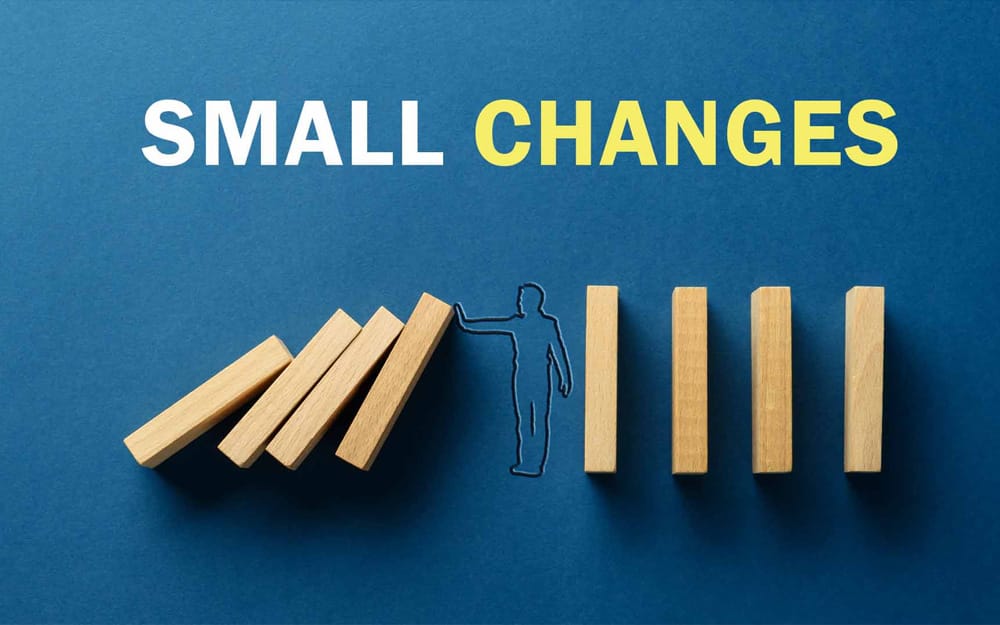
Big transformations rarely arrive with fireworks. Most of the time, they tiptoe in quietly—built from tiny, almost unnoticeable shifts repeated day after day. If you’ve ever wondered how some people seem to “suddenly” succeed, improve their health, or master a skill, here’s the truth: there was nothing sudden about it. It was the power of small changes, patiently applied over time.
This idea isn’t flashy, but it’s incredibly effective. And once you understand how it works, you can use it in nearly every area of your life.
Why Small Changes Matter More Than Big Moves
Big goals can feel exciting at first, but they often come with big pressure. When the effort feels overwhelming, motivation drops—and consistency disappears. Small changes work differently.
A tiny improvement doesn’t scare your brain. It doesn’t demand heroic willpower. Instead, it slips easily into your routine and creates momentum.
Think about it like this: improving just a little each day may not feel impressive today, but over weeks, months and years, those gains stack up. This is how progress compounds—quietly, steadily and powerfully.
The Compounding Effect of Consistency
Compounding isn’t just about money; it applies to habits, skills, relationships and personal growth. What you repeat, you reinforce.
For example:
- Reading a few pages daily builds knowledge.
- Walking 10 minutes a day improves fitness.
- Writing a short paragraph daily strengthens creativity.
On their own, these actions seem small. Together, they create a curve that bends sharply upward over time. The key isn’t intensity—it’s consistency over time.
Why We Underestimate the Power of Tiny Wins
Humans are wired to notice dramatic changes, not gradual ones. That’s why small improvements often feel pointless in the beginning. You don’t see results right away, so it’s easy to quit.
But here’s the catch: results lag behind habits. The work you do today may not show benefits immediately, but it’s laying a foundation. Many people stop just before the breakthrough because they mistake slow progress for no progress.
Small Changes Reduce Resistance
One of the biggest reasons people fail to change is resistance—mental friction that says, “This is too hard.” Small changes lower that barrier.
Instead of:
- “I’ll work out for an hour every day,” try “I’ll move for five minutes.”
- “I’ll completely change my diet,” try “I’ll add one healthy option.”
- “I’ll wake up at 5 a.m.,” try “I’ll wake up 10 minutes earlier.”
These adjustments feel doable and that’s exactly why they work. Action beats intention every time.
Identity Shifts: The Hidden Multiplier
Small changes don’t just alter what you do; they change who you believe you are. Every tiny action is a vote for your identity.
When you consistently take small positive actions, you start thinking:
- “I’m someone who follows through.”
- “I’m someone who takes care of myself.”
- “I’m someone who keeps learning.”
This identity shift is powerful because once your self-image changes, better decisions follow naturally. You don’t force growth—you become it.
The Role of Patience in Long-Term Results
Patience isn’t passive. It’s an active commitment to keep going even when results are invisible. In a world obsessed with instant gratification, patience becomes a competitive advantage.
Most meaningful outcomes—strong relationships, deep skills, lasting confidence—take time. Small changes honor that reality. They say, “I’m willing to invest now for a better later.”
How Small Changes Add Up in Everyday Life
Let’s make this practical. Here’s how small changes create big results across different areas:
Personal Growth
Learning one new idea a day can reshape how you think over a year.
Health and Energy
Choosing stairs occasionally or drinking more water daily leads to noticeable improvements over time.
Work and Skills
Practicing a skill for 15 minutes a day beats occasional marathon sessions.
Mental Well-Being
Taking a moment to pause, breathe, or reflect can reduce stress more than you expect.
In each case, the results aren’t dramatic at first—but they are durable and lasting.
Avoiding the “All-or-Nothing” Trap
One missed day doesn’t erase progress. The danger isn’t slipping—it’s quitting. Small-change thinking avoids the all-or-nothing mindset by focusing on returning quickly, not being perfect.
Progress is messy. Growth isn’t linear. What matters is showing up again.
Consistency with flexibility beats perfection with burnout.
Designing Your Environment for Small Wins
Willpower is unreliable. Environment is not. Make small changes easier by adjusting what’s around you.
- Place reminders where you’ll see them.
- Reduce friction for good habits.
- Increase friction for habits you want to reduce.
When your environment supports your goals, small actions happen almost automatically.
Why Time Is Your Greatest Ally
Time magnifies whatever you do repeatedly. That can work for you or against you. Small negative habits also compound—but so do positive ones.
The good news? You don’t need to overhaul your life today. You just need to start slightly better than yesterday and keep going.
How small changes create big results over time isn’t a motivational slogan—it’s a practical strategy for real life. Tiny actions, repeated consistently, shape outcomes more reliably than big, short-lived efforts. When you focus on progress instead of perfection, patience instead of pressure and identity instead of outcomes, growth becomes inevitable.
Start small. Stay consistent. Let time do the heavy lifting. The results will surprise you—not overnight, but right on schedule.


