
A business can offer an excellent product and still struggle to become recognizable if its visual presentation lacks consistency. Customers encounter brands in seconds: a social media post, website header, product package, advertisement, or business card may be enough to create an initial impression. This is where understanding how a logo helps build a brand becomes important.
A logo is not the entire brand, but it can become one of its most recognizable visual assets. When it works alongside typography, colors, messaging, photography, and other design elements, it can help create a consistent identity that customers gradually associate with a particular business.
The most effective approach is to think of a logo as a starting point for a broader brand experience. Instead of asking only whether a logo looks attractive, businesses should consider whether it communicates the right personality, works across different touchpoints, and can grow with the organization.
A Logo Gives the Brand a Visual Anchor
Every strong brand needs recognizable elements that customers can associate with it. A logo can provide that visual anchor.
Imagine encountering a company several times over a period of weeks. You might see its logo on Instagram, then notice it on its website, and later encounter it on an advertisement. Even if you do not consciously study the design each time, repeated exposure can strengthen the association between the visual mark and the business.
This is one reason logo branding is more than simply creating an attractive symbol. The logo becomes part of a larger visual language.
However, recognition depends on consistency. Changing the logo’s colors, proportions, or typography from one application to another can weaken the connection customers are developing.
How a Logo Helps Build a Brand Through Recognition
One of the clearest answers to how a logo helps build a brand is through repeated visual recognition.
Brand recognition develops when people become familiar with identifiable elements associated with a company. A distinctive logo gives customers a quick visual reference point.
Think about a business that consistently uses the same symbol on its website, packaging, social media, presentations, and advertising. Each appearance reinforces the same identity.
The process is gradual. A logo does not automatically make a business recognizable overnight. Instead, it works as part of repeated customer experiences.
This is why a memorable logo should be simple enough to recognize but distinctive enough to separate the business from competitors.
A Logo Communicates Personality
A logo can influence how a company is perceived before customers read its messaging.
Typography, shapes, proportions, and color palette can all contribute to personality.
A technology company might use structured geometry and clean typography to communicate efficiency. A premium hospitality brand might use refined lettering and restrained colors. A creative agency could adopt a more expressive visual direction.
There is no universally correct style. The right choice depends on brand strategy, target audience, industry, and desired positioning.
The important point is that design decisions should communicate something intentional.
A logo should not simply follow whatever happens to be trending. A trend may look appealing today but become dated later. A stronger approach is to identify the qualities the business wants to communicate and develop the visual identity around them.
It Creates Consistency Across Customer Touchpoints
A business rarely interacts with customers through a single channel.
Customers may encounter a company through:
- A website
- Social media
- Packaging
- Business cards
- Advertisements
- Presentations
- Signage
- Printed materials
A consistent logo helps connect these experiences.
For example, someone may discover a company through an online advertisement and later visit its website. If the same logo, colors, and visual style appear in both places, the customer can more easily recognize that the experiences belong to the same business.
This is where brand consistency becomes particularly valuable. The logo acts as a recurring visual element while supporting graphics, typography, and colors create the surrounding system.
Your Logo Can Help Differentiate the Business
Businesses operate in competitive environments. Customers may have several companies to choose from, and many competitors can offer similar products or services.
A distinctive visual identity can help create separation.
Before developing a logo, it is useful to study competitors. Look at their symbols, typography, colors, and overall visual direction. This research can reveal patterns that dominate the industry.
If every competitor uses nearly identical visual ideas, copying those conventions may make a new company blend in.
Differentiation does not mean creating something strange simply to attract attention. It means identifying a visual approach that feels appropriate for the business while giving it a recognizable character.
The Logo Works Better as Part of a Complete Identity
A common mistake is expecting the logo to communicate every aspect of a company.
A logo has limitations. It cannot explain a complete value proposition, describe a customer experience, or communicate an entire brand story on its own.
Instead, it should work alongside other elements.
A complete visual identity might include:
Typography
Fonts that establish a consistent personality across marketing and communication.
Color
A carefully selected palette that supports recognition and creates visual harmony.
Imagery
Photography or illustration styles that reinforce the brand’s personality.
Graphic elements
Shapes, patterns, icons, and layouts that create additional recognition.
Brand guidelines
Rules that explain how these elements should be used consistently.
Together, these components create a business identity that is more powerful than any individual design asset.
Why Customization Matters
Businesses are different, even when they operate within the same industry. Their audiences, values, positioning, personality, and long-term goals can vary significantly.
This is why custom logo design services can be valuable when a business needs an identity tailored to its specific circumstances.
Customization should involve more than changing a template’s colors. The designer should consider the company’s positioning and develop a concept that has a meaningful relationship with the business.
For example, two fitness companies might both want energetic branding. One could focus on high-performance athletes, while another might target beginners who want an approachable environment. Their identities could communicate energy in very different ways.
A tailored approach allows visual communication to reflect those differences.
How a Logo Helps Build a Brand Over Time
The answer to how a logo helps build a brand becomes clearer when you look at the long-term customer journey.
A customer may first see a logo without knowing anything about the company. Later, they might visit the website, purchase a product, interact with customer service, and eventually become a repeat customer.
Each interaction adds meaning to the visual identity.
The logo initially identifies the company. Positive experiences gradually give that visual mark additional associations.
This means branding is not simply about making a logo memorable. The business must also deliver experiences that reinforce what the visual identity represents.
A professional logo can establish a foundation, but reputation is built through everything that happens around it.
Scalable Design Makes the Identity More Useful
Modern brands need identities that work in many sizes and environments.
A logo might appear as a tiny social media profile image and later be printed on a large sign. It could also appear on a mobile website, presentation, product label, or promotional item.
Scalable logo design helps ensure that the identity remains clear across these applications.
Responsive variations can also be useful. A full logo may be appropriate for a website header, while a simplified symbol could work better in a small digital space.
When reviewing a logo, test it in realistic situations rather than judging it only on a large presentation screen.
Using Brand Guidelines to Protect Recognition
A strong identity can lose its impact when people use it inconsistently.
Brand guidelines help establish clear rules for logo placement, colors, typography, spacing, backgrounds, and other visual elements.
For example, guidelines might specify the minimum amount of space surrounding the logo or explain which version should appear on dark backgrounds.
This becomes increasingly useful as businesses grow. Employees, marketing teams, printers, and external designers can refer to the same standards.
Consistency helps ensure that the visual identity remains recognizable regardless of who creates the next marketing asset.
Practical Questions to Ask About Your Logo
If you already have a logo, evaluate it from a strategic perspective rather than relying only on personal taste.
Ask:
- Does it reflect the business personality?
- Is it distinctive within the industry?
- Can customers recognize it quickly?
- Does it work at small and large sizes?
- Does it work in black and white?
- Does the typography complement the symbol?
- Does the color palette support the desired positioning?
- Can it work across digital and print applications?
- Does it fit naturally into a broader visual identity?
- Can the design remain useful if the business grows?
If several answers are negative, the issue may not simply be the logo itself. The business may need to rethink its broader brand strategy.
Design Centura and the Bigger Branding Picture
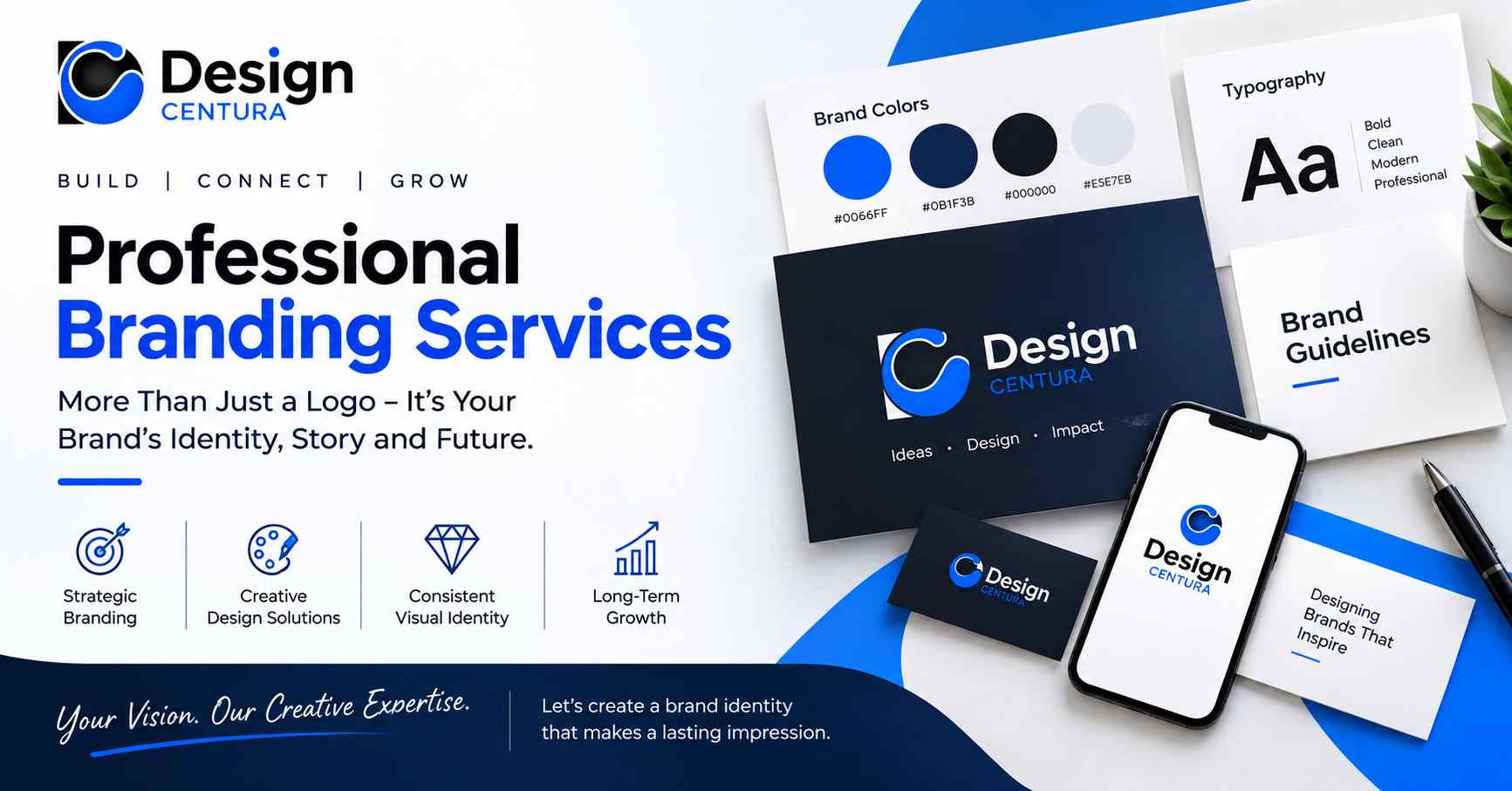
Design Centura focuses on the relationship between logo design and the broader visual identity surrounding a business. A logo can provide a recognizable foundation, while typography, colors, graphics, and guidelines help extend that identity across different customer touchpoints.
For businesses considering custom logo design services, defining the desired audience, personality, positioning, and practical applications before design begins can make the process more focused.
The goal should be to create an identity that is not only visually appealing but also useful in real business situations.
Final Thoughts
Understanding how a logo helps build a brand starts with recognizing that a logo is a visual identifier, not the entire branding strategy. Its real value comes from how consistently and meaningfully it is used alongside the rest of the brand identity.
A distinctive logo can support recognition, reinforce consistency, differentiate a company, and provide a visual foundation for future marketing. But its effectiveness ultimately depends on the experiences customers associate with the business.
For organizations exploring custom logo design services, the best approach is to think beyond the immediate artwork. Consider scalability, typography, color, brand guidelines, digital applications, and long-term positioning.
Design Centura recognizes that thoughtful logo branding should connect creative design with practical communication. When the logo and broader identity work together, businesses have a stronger foundation for creating a recognizable and consistent presence.
Ultimately, how a logo helps build a brand is not about the symbol working alone. It is about giving every customer interaction a recognizable visual connection to the business—and turning that connection into familiarity over time.


