
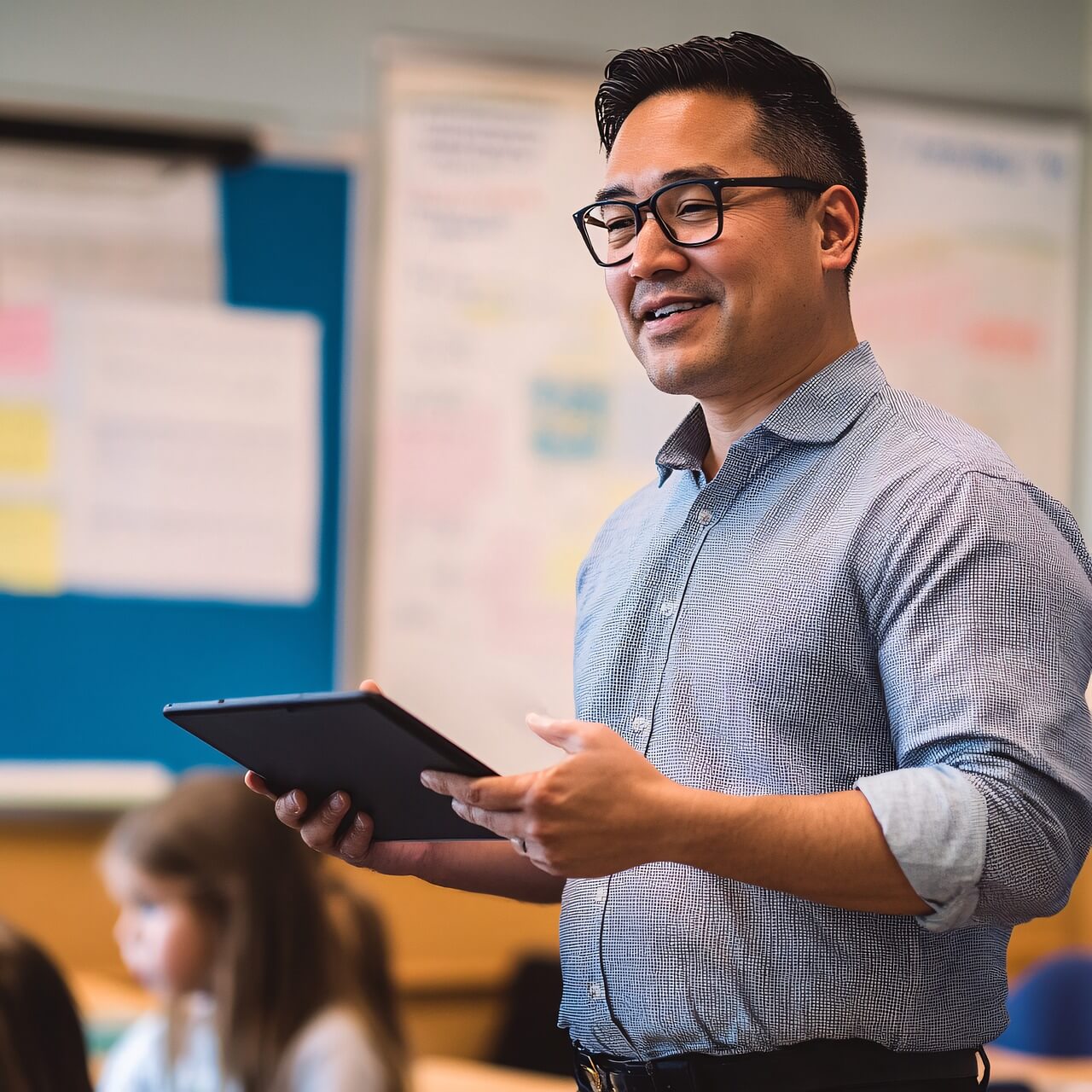
There was a time when a classroom meant chalk dust, a blackboard, and a teacher’s voice reaching for the back row. That room hasn’t vanished. But a laptop sits on the desk now, next to the notebook, and a lesson can travel down a screen just as easily as it once travelled through the air. Digital learning didn’t knock politely. It walked in and made itself at home, and it isn’t going anywhere.
The question worth asking was never whether it belongs. What matters is whether a school uses it well, because the very thing that can crack open a whole world can just as quickly turn a lesson into passive staring. A few of the sharper places, the ones parents talk about as the best CBSE school in Ballia, have figured that out, and you can feel the difference the moment you step inside.
What it gets right
Start with the plain one: reach. A kid in a small town can now sit in on a virtual lab, watch a film shot on the other side of the planet, or listen to someone who actually does the thing explain it far better than any textbook ever managed. Stuff that used to depend entirely on where you were born is suddenly a tap away.
Then there’s the way it bends to the child instead of the other way round. A slow reader can drag the video back and watch it twice, no shame in it. A fast one can bolt ahead without drumming their fingers waiting for everyone else. Good software shifts to fit the kid, and that’s something one teacher with forty faces in front of her simply cannot pull off single-handed.
Parents weighing up a CBSE school in Ballia ask about this more and more, whether the technology is there to explain things better or just to look shiny in the brochure.
Where it falls apart
For all that, digital learning has a darker side, and the schools worth trusting say so out loud.
The first trap is passivity. A screen is easy to gaze at and hard to actually wrestle with. A child can sit through a full video and walk away with nothing, nodding along while their head is somewhere else entirely. Watching isn’t learning. The two get muddled far too often.
Then the divide. Not every home has a decent device or a connection that holds. Lean too hard on digital work and you quietly leave some kids stranded, which is the exact opposite of the job. The best schools in Ballia chew on this properly, building lessons that never hang on a piece of hardware a child might not own.
Finding the middle
The schools that get this right share a quiet belief: technology is a tool, never the teacher. It opens a door, shows a picture, lends a hand, but the actual learning still happens in the talking, the doing, the teacher clocking a baffled face and pausing to sort it out.
Wander through the top CBSE schools in Ballia city and you’ll see the screens used in short, sharp bursts, not left droning on all day. A smartboard cracks a topic open, then the tablets go back in the drawer and the kids thrash it out, write it down, try it themselves. The screen starts the conversation. Then curiosity takes over, with students asking questions, sharing ideas, solving problems together, and learning to think beyond whatever appeared on the screen in front of them.
The CBSE affiliated schools in Ballia Uttar Pradesh that manage this best keep the human bits of school firmly bolted down too. Handwriting still counts. Group work still counts. A lab you can smell still counts. The digital sits beside these things, adding to them instead of shoving them off the table. That balance, more than any one gadget, is what sets a school apart, and it’s part of why a handful of them now come up when people talk about the top 10 CBSE schools in Uttar Pradesh.
The teacher still runs the room
A top senior secondary school in Ballia does it properly: it never hands a class over to a screen and slips out the door. The teacher stays dead centre, using the tool the way any good craftsman uses one, on purpose and with a light touch. They know when technology adds value, when discussion matters more, and when students simply need guidance, questions, encouragement, or a chance to think independently without digital distractions.
Don’t forget the field
Here’s the thing that’s easy to lose in all the screen talk: the cure is usually just outside the classroom. A school that throws money at technology and lets the playground go to seed has missed the whole point of being a child.
Which is why sports in Ballia schools deserve a seat at this table. Time on the field balances time on the screen. A kid who codes before lunch and plays after it is in far better shape than one welded to a device all day. The strongest schools don’t treat running around as a break from the real work. They treat it as part of it, a counterweight that keeps children fit, sharp, and with both feet on the ground. Regular sports also teach teamwork, discipline, resilience, leadership, and healthy competition—qualities no app can fully replicate and every growing child needs to develop.
Conclusion
Parents sifting through the English medium schools in Ballia Uttar Pradesh would be smart to ask not whether a school uses technology, but how. To teach better, or just to seem up to date? Does it guard the human, physical, hands-on parts of learning, or has it quietly let them slide? A thoughtful balance between digital tools, meaningful interaction, creativity, and real-world experiences can make learning more engaging, purposeful, and effective for every child. Get those answers straight, and you’ll find a school where the technology does what it’s meant to, serving the child instead of the other way around.


