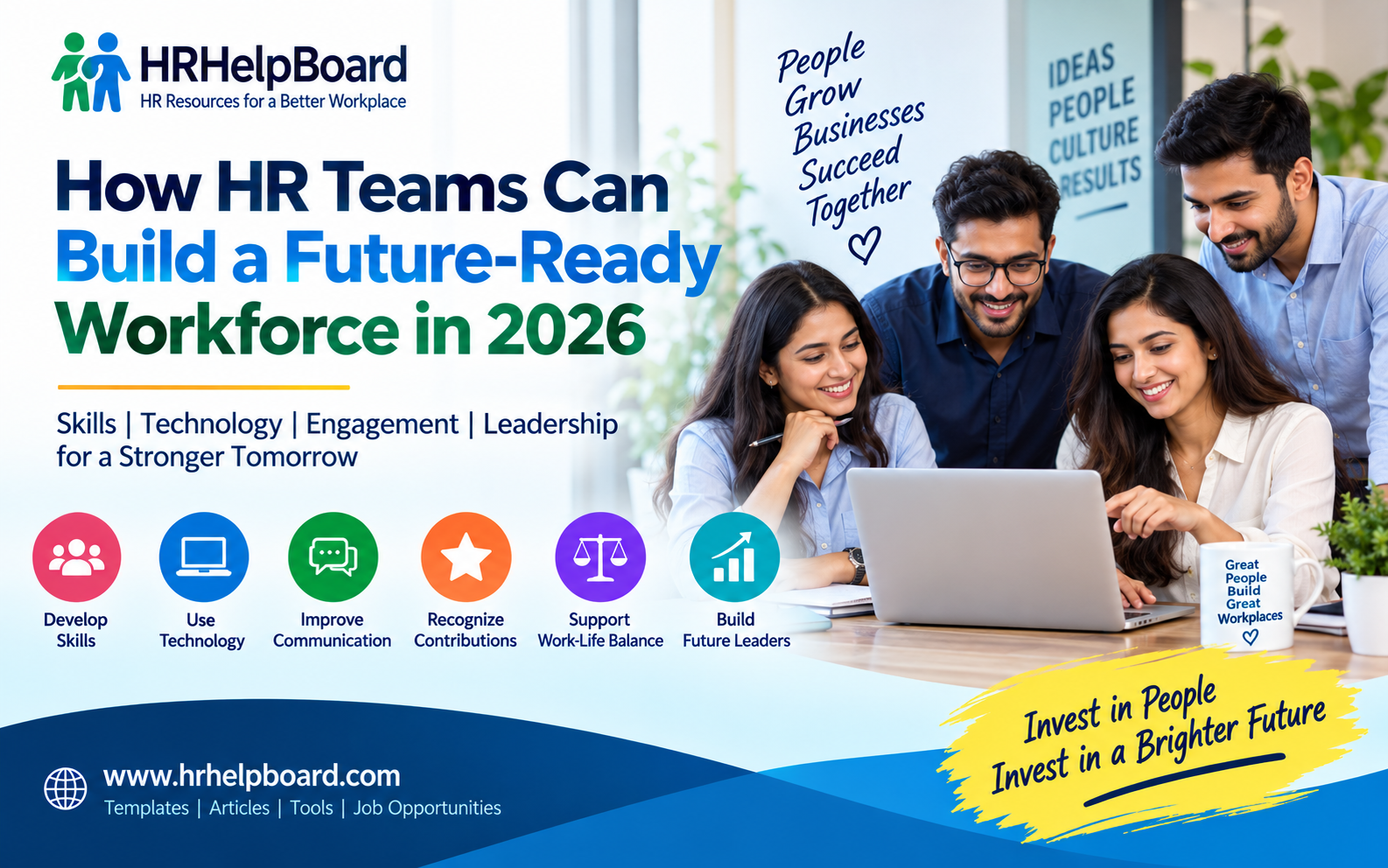
The workplace continues to evolve as organizations adopt new technologies, changing work practices, and new approaches to employee development. In 2026, HR teams have an important role in helping organizations prepare employees for these changes while maintaining engagement and productivity.
A future-ready workforce is not simply a team with technical skills. It is a workforce that can adapt to changing business requirements, learn new skills, collaborate effectively, and respond to new opportunities.
HR professionals can support this transformation by combining workforce planning, employee development, technology, communication, and a strong workplace culture.
Understand the Skills the Organization Will Need
The first step toward building a future-ready workforce is understanding which skills will be required in the coming years.
Business strategies can change quickly, and employees may need to develop new technical and interpersonal capabilities. HR teams can work with department leaders to identify current skill gaps and determine which capabilities will become increasingly important.
These may include:
- Digital skills
- Data literacy
- Communication
- Leadership
- Problem-solving
- Collaboration
- Adaptability
- Customer-focused skills
- Technology awareness
A structured skills assessment can help HR teams understand the difference between the capabilities employees have today and the capabilities the organization may need tomorrow.
Create Continuous Learning Opportunities
Traditional training programs that happen only once or twice a year may not be enough for a rapidly changing workplace.
Organizations can encourage continuous learning through online courses, workshops, mentoring, coaching, internal knowledge-sharing sessions, and practical projects.
Employees can also be encouraged to identify skills they want to develop as part of their career plans.
HR teams should make learning practical and relevant to employees’ actual responsibilities. When employees can immediately apply new knowledge to their work, professional development can become part of everyday performance.
Encourage Internal Career Development
Employees often want to understand how they can progress within an organization.
HR teams can create clearer career paths that show employees the skills and experience associated with different roles.
Internal mobility programs can also help organizations make better use of existing talent. Instead of always looking externally for every new capability, companies can identify employees who may be interested in moving into new roles after receiving appropriate training.
Career conversations, mentoring, job rotations, and internal vacancies can all support professional growth.
Strengthen Employee Engagement
A future-ready workforce also needs employees who are engaged with their work and organizational goals.
HR teams can regularly collect employee feedback through surveys, one-to-one discussions, focus groups, and other communication channels.
However, gathering feedback should be followed by appropriate action. If employees repeatedly identify the same workplace challenges, HR teams and managers should evaluate the underlying causes and determine what improvements may be possible.
Engaged employees are more likely to understand organizational objectives and contribute ideas for improving the workplace.
Use HR Technology Strategically
Technology can help HR teams manage workforce information, automate repetitive processes, and provide employees with more convenient HR services.
Organizations may use technology for activities such as:
- Recruitment
- Employee onboarding
- Learning management
- Attendance and leave management
- Performance management
- Employee surveys
- Workforce analytics
- HR documentation
HR technology should be selected according to actual business requirements rather than simply because a tool is popular.
HR professionals should also ensure that employees receive appropriate training when new systems are introduced. Technology works best when employees understand how it supports their work.
Develop Adaptable Leaders
Leadership development is another important part of workforce readiness.
Managers increasingly need to support employees through organizational changes, new technologies, evolving customer expectations, and different working arrangements.
HR teams can provide leadership development programs focused on communication, coaching, delegation, feedback, conflict management, decision-making, and change management.
Managers should also learn how to have meaningful career and development conversations with employees.
Strong leadership can help employees understand why workplace changes are occurring and how they can contribute to them.
Build a Culture That Supports Innovation
Employees need an environment where they can share ideas and identify opportunities for improvement.
HR teams can support innovation by encouraging constructive feedback, collaboration, knowledge sharing, and experimentation within appropriate organizational boundaries.
Recognition programs can also highlight employees who contribute useful ideas or help improve workplace processes.
A culture of innovation does not mean every idea must be implemented. Instead, employees should have appropriate opportunities to contribute suggestions and participate in improvement initiatives.
Prepare Employees for Change
Change is becoming a regular part of organizational life. New technology, business models, market conditions, and customer expectations can all influence the skills organizations need.
HR teams can prepare employees by communicating changes clearly and providing relevant training.
Change management should also consider the employee experience. Employees may have questions about how a new system, process, or organizational structure will affect their responsibilities.
Clear communication can help reduce uncertainty and provide employees with a better understanding of what is expected.
Support Well-Being and Sustainable Performance
Workforce readiness should also include employee well-being.
Employees who are expected to continuously learn and adapt need sustainable working conditions. HR teams can review workloads, leave policies, flexibility, wellness initiatives, and workplace practices to identify potential areas for improvement.
Supporting well-being does not mean reducing performance expectations. Instead, organizations can aim to create working conditions that allow employees to perform consistently over the long term.
Measure Workforce Development
HR teams can use relevant workforce metrics to understand whether their development initiatives are producing useful results.
Possible measures include:
- Training participation
- Skill development
- Internal mobility
- Employee engagement
- Performance trends
- Employee retention
- Leadership development
- Time to productivity for new employees
Metrics should be interpreted in the context of the organization and the specific workforce. A single measurement cannot fully explain employee performance or organizational readiness.
Conclusion
Building a future-ready workforce in 2026 requires HR teams to think beyond recruitment and traditional training programs. Organizations need employees who can learn continuously, adapt to change, collaborate effectively, and develop new capabilities as business requirements evolve.
HR professionals can support this objective through skills planning, continuous learning, career development, employee engagement, HR technology, leadership development, innovation, and sustainable workplace practices.
A future-ready workforce is ultimately built through continuous investment in people. When employees receive opportunities to learn, contribute, grow, and adapt, organizations can create a stronger foundation for long-term workforce development.


